How To Invest In Silver
in the UAE
How to invest in silver in the UAE begins with knowing the different ways to gain exposure to this precious metal — physical silver, digital silver, silver savings accounts, and silver ETFs.
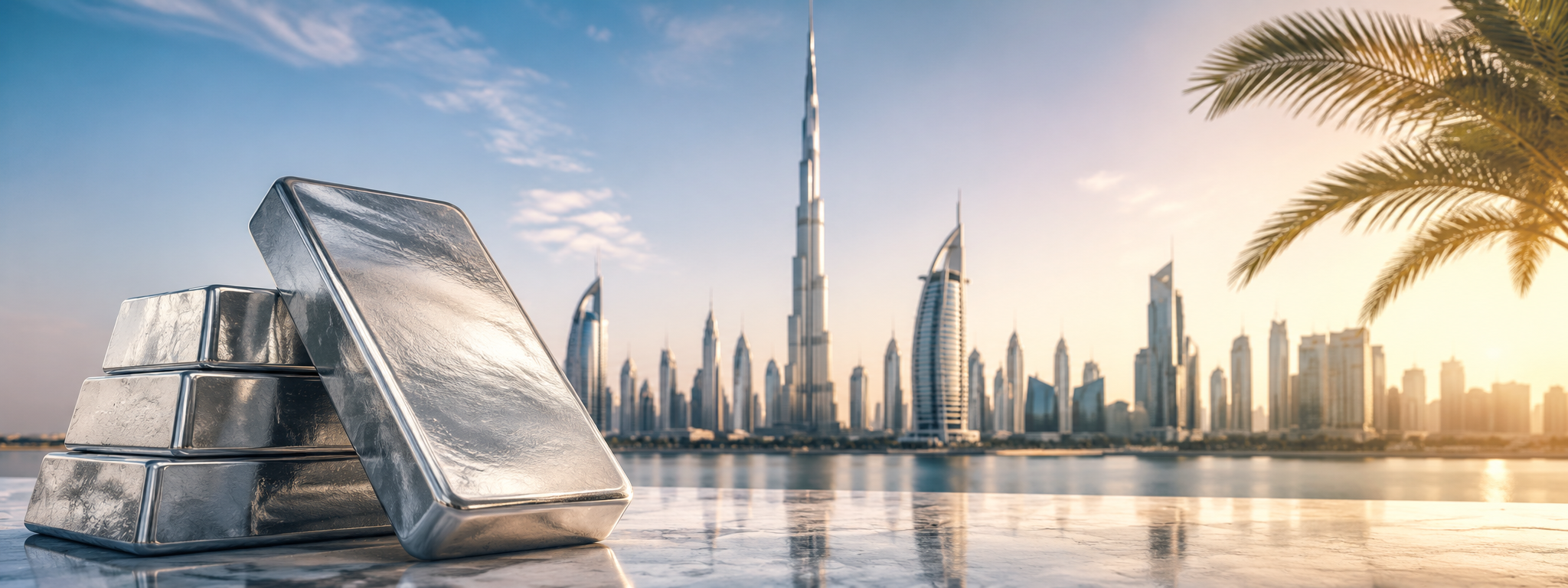
How to invest in silver in the UAE begins with knowing the different ways to gain exposure to this precious metal. UAE investors can choose between physical silver, digital silver, silver savings accounts, and silver exchange-traded funds (ETFs), based on their investment objectives, budget, liquidity requirements, and risk tolerance.
From 999 fine silver bars and coins to vaulted-backed digital ownership and XAG-denominated bank accounts, every option has its own prices, storage needs, and ownership structure; this instruction explores the best ways to buy silver in the UAE, how silver investing works, where to invest, and the key factors to check before adding silver to your portfolio.
What is Silver Investing?
Silver investing generally emphasizes long-lasting ownership and wealth preservation. Investors might buy physical silver, silver-backed products, or any other investment vehicles for long-term holdings instead of reacting to regular cost variations. For many beginners, this strategy can feel more straightforward and less demanding.
A Long-term Vision
You will hold assets for months or even years.
Needs Occasional Monitoring
Emphasis is on long-term worth and trends, not regular cost swings.
Decreases Emotional Pressure
Market ups and downs seem to make this perfect for patient individuals.
Your ideal choice depends on how you want to own or access the metal. Whether that means holding physical silver bars and coins, buying vault-backed digital silver, or using a silver savings account. This includes investing through a silver ETF or trading silver for short-term gains. Every procedure provides a distinctive balance of ownership, liquidity, storage, fees, and risk compliance. Understanding how they work can help you choose the perfect way to add silver exposure to your investment portfolio.
Why Do Investors Consider Silver in the UAE?
Silver is a precious metal with a dual identity: part safe-haven asset, like gold, and part industrial commodity, since roughly half of global demand comes from manufacturing electronics, solar photovoltaic cells, medical cells, and electric vehicle components. Some UAE-specific factors add to the appeal:
Dubai's status as a bullion hub
The emirate manages a substantial share of global physical gold trade, and the similar infrastructure refiners, vaults, souks, and a dedicated products exchange extends to silver.
Tax treatment
Investment-grade silver (99% purity or higher, in tradable bullion form) is zero-rated for VAT, unlike jewelry and lower-purity items, which attract the standard 5% rate.
No personal capital gains tax
The UAE does not levy capital profits tax on individual investors, which applies to silver as it does to most private investment assets.
Growing product access
What used to mean a trip to the Gold Souk now also includes bank-issued silver bars, DGCX-listed futures, broker-accessible ETFs, and mobile trading apps offering silver CFDs.
None of this makes silver risk-free; it stays one of the more volatile commodities prone to sharp swings driven by the industrial cycle and US dollar movements, and speculative positioning. Treat it as a diversification tool within a broader portfolio, not a guaranteed return.
Types of Silver Investment
Silver investment can be done through different options that offer a distinctive experience in terms of control, risk, and involvement. Knowing how these forms differ supports clarifying which strategies might appropriate you best:
Physical Silver
Through this option, one gets direct ownership. Physical silver feel straightway because you may buy the metal itself, but it also requires thinking about storage, securely and long lasting maintained.
Silver ETFs
Someone who needs exposure to the costs of silver without managing the metal has the best option for Silver ETFs. They are easier to handle, traded through platforms, and eliminate the requirement of storage concerns.
Digital Silver
Digital silver provides a completely online experience. Digitally recorded ownership makes it appealing to investors who value convenience, speed, and less physical responsibility.
Silver Futures
Futures are more modern and rapidly moving. They need persistent attention and a higher tolerance for risk that might be challenging for beginners at first.
Mining Stock
Mining stocks focus on the organization instead of the metal itself. They not only suggest the best prices, but also their performance affects management decisions, prices, and regulations.
Where to Buy Silver in the UAE?
Are you looking for a verified and easy way to invest in silver in the UAE? Simodi Gold FZCO provides a digital strategy for precious metals investment. Simodi is positioned as the most trusted platform for digital gold and silver investments. This delivers a simple and secure way to gain exposure to precious metals without any practical considerations of personally storing physical bullion.
Based in Dubai, Simodi Gold FZCO is located at 1902, The Dome Tower, Cluster N, JLT, Dubai, UAE. Investors can contact the company directly at +971 4 566 7196 or support@simodigold.com for information about its digital silver investment options.
How to Invest in Silver for Beginners?
Starting with silver is easier when you have a clear strategy. Adhere to these simple phases mentioned below:
Set Your Objective
Decide whether you desire diversification, long-term development, or any tangible assets. A clear investment objective helps you select silver investment choices the perfect matches with your requirements.
Know the Market
Look at silver prices and learn what drives price movements. Pay proper attention to some factors that affect price variation.
Select Your Process
Consider physical silver, digital silver, silver ETFs, or silver accounts. Each choice depends on accessibility, ownership, liquidity, and investment horizon.
Set a Budget
Invest only what you can afford to keep invested. Set a certain allocation for silver so it adjusts comfortably within your overall investment plan.
Start with Small
Gain experience before committing huge amounts. Beginning with a manageable quantity that permits you to know the cost, changes with less risk.
Compare Prices
Check out premiums, charges, storage charges, and spreads. Advertised costs do not indicate the full price of buying and eventually selling your investment.
Select a Reputable Provider
Verify ownership, security, and transparency. Seek clear details about silver purity, fees, and how you can sell or redeem your holdings.
Expect Volatility
Silver prices can increase and decrease, potentially. Be ready for some short-term cost variation and avoid making decisions based solely on one temporary market situation.
Stay Disciplined
Prevent any emotional buying or selling depending on short-term movements. Adhere to your investment approach and understand your position based on your digital objectives instead of market movements.
Keep Learning
Gain some understanding as you gain investment experience. Continue following silver market trends, investment prices, and other factors that influence the cost.
VAT and Tax Rules for Silver Investment in the UAE
The United Arab Emirates applies a standard 5% Value Added Tax (VAT), overseen by the Federal Tax Authority (FTA), but precious metals get special treatment:
Investment-grade silver (99%+ purity, tradable bullion form) is zero-rated on the first supply after refining, whether bought from a DMCC-licensed dealer or another registered seller.
Silver jewelry, decorative items, and sub-99% purity products are standard-rated at 5% VAT, calculated on the completed on the full invoice value, involving making charges.
A Reverse Charge Mechanism (RCM) introduced under Cabinet Decision No. 127 of 2024 shifted VAT tracking responsibility from seller to buyer for wholesale transactions between VAT-registered businesses. This related mainly to traders and dealers rather than individual retail investors.
No capital gains tax applies to individual investors in the UAE, meaning profit from selling silver is not taxed at a personal level the way it might be in other jurisdictions.
Always ensure a dealer's invoice clearly states the purity grade and VAT treatment; this protects you if you ever need to prove investment-grade status for resale or export.
Silver Vs. Gold: How They Compare for UAE Investors?
| Factor | Silver | Gold |
|---|---|---|
| Entry cost | Lower price per unit, making it more accessible for smaller budgets | Higher price per unit, requiring more capital upfront |
| Volatility | Higher volatility, with prices influenced by industrial demand, economic conditions, and investment flows | Generally lower volatility and widely viewed as a stable store of value |
| Demand drivers | Industrial applications in electronics, solar panels, EVs, plus investment demand | Investment, jewellery, central-bank purchases, and safe-haven demand |
| VAT (investment-grade) | 0% VAT when qualifying investment-grade silver meets the applicable 99%+ purity requirement | 0% VAT when qualifying investment-grade gold meets the applicable 99%+ purity requirement |
| Storage | Bulkier for the same monetary value because silver has a lower value density | More compact and easier to store for a given monetary value |
| Typical UAE investor use | Portfolio diversification and exposure to industrial-growth trends | Core wealth preservation, diversification, and safe-haven allocation |
Several UAE-based advisors frame silver as a smaller satellite allocation. It is often cited in the 5 to 10% range of a precious metals portfolio instead of a substitute for gold's traditional wealth preservation role. That said, allocation decisions are personal and should reflect your own risk tolerance and objectives rather than a generic rule of thumb.
Digital Silver vs Physical Silver
Both choices are different, but they suit different investment preferences:
| Factor | Physical Silver | Digital Silver |
|---|---|---|
| Ownership | You hold bars or coins | You own a digital claim/interest backed by silver, depending on the platform |
| Minimum investment | Usually higher | Can often start with a small amount |
| Storage | You arrange secure storage | Usually stored in a professional vault |
| Liquidity | Depends on dealer and product | Often easier to buy or sell through the platform |
| Premiums | Dealer premiums can apply | Platform fees/spreads may apply |
| Delivery | Physical possession is possible | Depends on whether physical redemption is offered |
| Best suited for | Investors wanting direct possession | Investors prioritising convenience and fractional ownership |
Who Regulates Silver Trading in the UAE Market?
Multiple bodies oversee distinctive portions of the precious metals ecosystem:
Dubai Multi Commodities Centre (DMCC): the free zone authority that licenses precious-metals traders and sets the Dubai Good Delivery accreditation standard.
Dubai Gold and Commodities Exchange (DGCX): the regulated derivatives exchange (a DMCC subsidiary) where silver futures and options are traded.
Securities and Commodities Authority (SCA): the federal regulator overseeing commodities and futures trading nationally.
Dubai Financial Services Authority (DFSA): regulates financial services within the Dubai International Financial Centre (DIFC).
Financial Services Regulatory Authority (FSRA): the equivalent regulator within Abu Dhabi Global Market (ADGM).
Ministry of Economy: supervises Dealers in Precious Metals and Stones (DPMS) as Designated Non-Financial Businesses and Professions (DNFBPs) under UAE anti-money-laundering (AML) law, requiring dealers to run due diligence and reporting checks.
Having a licensed, DMCC-registered dealer or an established bank is not just a formality. It is your main protection against counterfeit or misrepresented bullion. This confirms your purchase falls under the AML and consumer protection framework instead of an unregulated informal seller.
Is Investing In Silver Good Or Bad?
| Pros of Investing in Silver | Cons of Investing in Silver |
|---|---|
| Accessibility: Silver is generally less costly than gold, so you can enter easily. | Volatility: Similar movement can feel uncomfortable. Costs can fluctuate rapidly. |
| Industrial Use: Silver has real industrial use. This provides it with demand beyond investment. | Quiet periods: Patience is tested as silver does not always move when individuals expect it to. |
| Tangibility: For some, holding silver feels reassuring due to its tangible and recognized nature. | Emotional Impact: Ease matters as much as returns. |
| Cost Movement: Silver reacts more quickly than gold and creates more opportunities. |
Risks You Must Know Before Investing
Here are some of the risks mentioned below:
Cost Fluctuations
Silver can experience high cost swings because of industrial demand, currency movements, and speculation.
Storage and insurance prices
Physical silver needs more storage area than gold for the same value, which raises storage prices.
Liquidity at resale
Dealers' buyback costs, premiums, and spread fluctuations, so check the buyback policy before purchasing.
Counterfeit risks
Buy from reputable, DMCC-licensed, or bank-affiliated dealers and verify purity certificates.
Leverage risks
Futures and CFDs that can magnify both gains and losses; this makes them inappropriate for inexperienced investors.
How to verify a Silver Dealer/Product?
Before investing in silver in Dubai, first verify the seller and the silver products. Here are some tips on how you can verify:
Check the Dealer's Reputation
Select an established dealer with verifiable business visibility, transparent contact details, and clear terms for purchasing and selling bullion.
Verify Silver Purity
Investment-grade bullion generally has a high fineness, like 999 or 999.9 silver. Look for the product for its stated purity, weight, and the manufacturer markings.
Look for Product Documentation
Verify the silver's weight, purity, cost, invoice, and any available authenticity or assay certificate.
Compare the Premium over Spot Cost
Compare the product's selling price with the current silver spot cost and know the dealer's premium and other changes.
Check the Buyback Policy
Understand the dealer's buyback costs, applicable charges, and spread to know what you may receive when you sell.
Looking to Invest in Silver in the UAE? Let's Talk
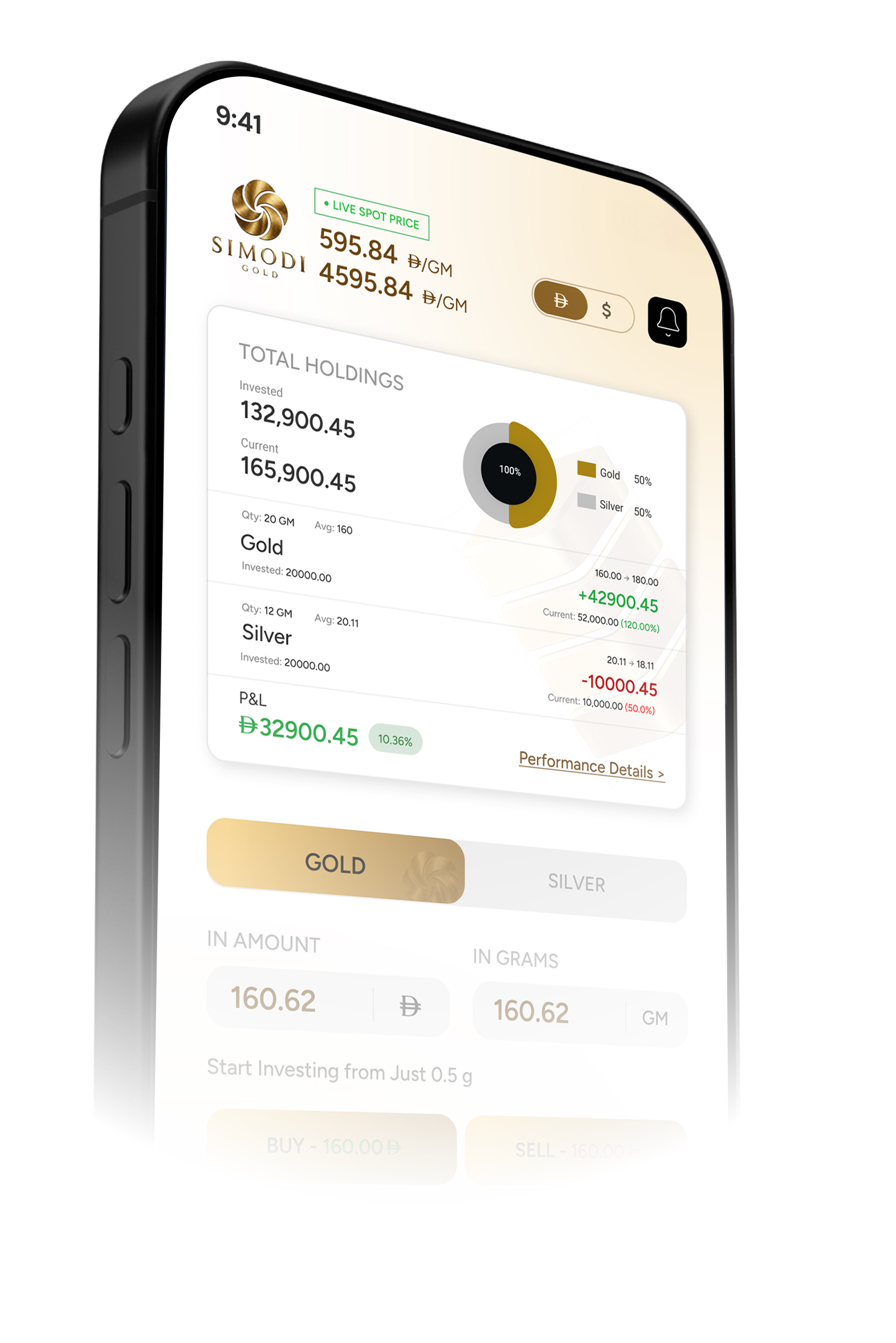
Whether you are considering physical silver bars, bullion coins, digital silver, or silver-linked investments, estimate the costs, liquidity, storage needs, and risks before committing your money. Start by defining how much you desire to invest, how long you intend to hold the asset, and whether you want direct ownership of physical metal. From these, differentiate reputable providers and know the overall price of buying and eventually selling your silver. The main objective is not simply to buy at the lower marketing costs. Download our Simodi app and get book a meeting with experts to get details about how to invest in silver in the UAE!
Frequently Asked Questions
Common questions about investing in silver in the UAE.
Silver can diversify a portfolio, but it is more volatile than gold. It might be appropriate for long-term investors.
Physical silver offers direct ownership, while digital silver is easier and prevents storage issues.
Investment silver generally 999 or 999.9 fine silver. Find out the purity, weight, and manufacturer information before buying.
VAT based on the silver product and transaction structure. Check out the current UAE tax rules before purchasing.
Many dealers offer buyback services. However, spreads and premium costs influence the amount you get.
Yes, digital silver might permit fractional purchases; on the other hand, physical silver generally requires buying a certain bar or coin size.